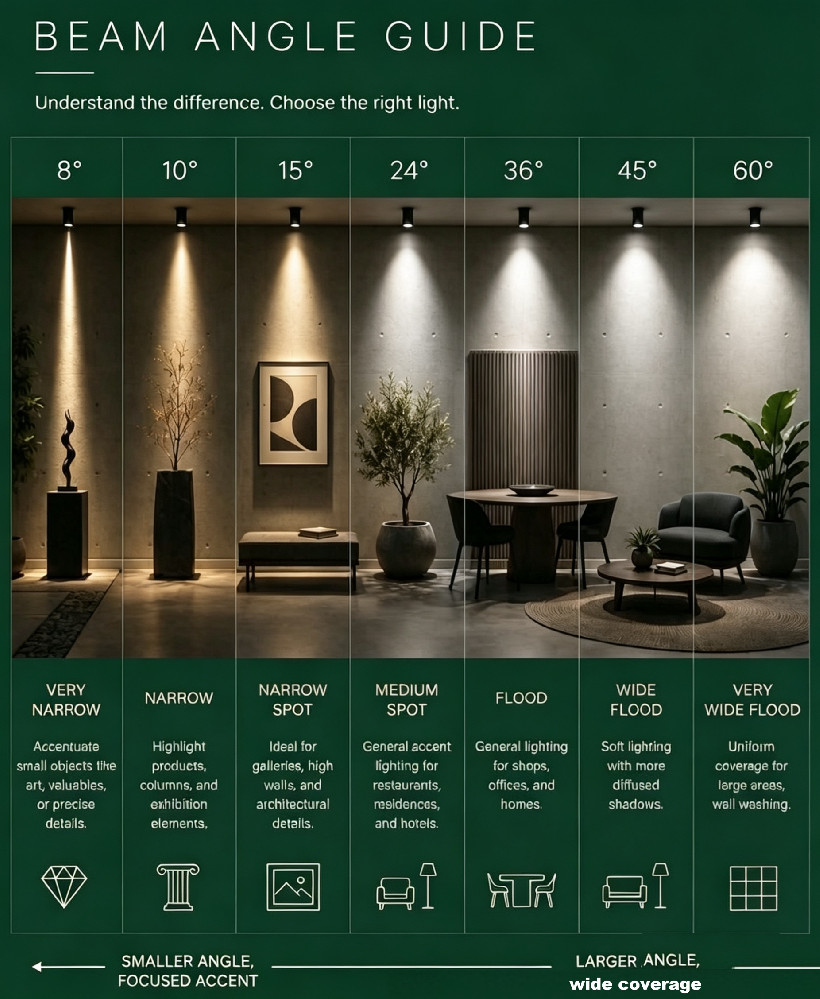
Lighting design is about much more than just brightness—it is about direction, focus, and atmosphere. One of the most critical factors in architectural lighting is the beam angle, which determines how concentrated or dispersed your light will be.
Here is a breakdown to help you choose the right light for the right effect:
1. Narrow Angles – Focused & Dramatic
Best for precision and creating high-contrast visual interest.
8° | Very Narrow: Extreme precision. Ideal for highlighting artwork, sculptures, luxury products, and intricate architectural details.
10° | Narrow: Creates strong visual contrast. Use this to draw attention to columns, focal points, and displays.
15° | Narrow Spot: A favorite for galleries and museums. Perfect for highlighting textured walls and distinctive structural features.
2. Medium to Flood Angles – The Balanced Approach
The perfect blend of accent lighting and general illumination.
24° | Medium Spot: Common in hospitality and residential projects. Provides controlled accent lighting without feeling overly dramatic.
36° | Flood: One of the most versatile angles. Suitable for retail, offices, homes, and general-purpose illumination.
3. Wide Angles – Soft & Uniform
Designed for gentle coverage and creating a relaxed atmosphere.
45° | Wide Flood: Creates gentle, diffused lighting with softer shadows—perfect for a comfortable, inviting space.
60° | Very Wide Flood: Ideal for broad, even coverage across large rooms, walls, and circulation areas.
�� The Golden Rule
Smaller Beam Angles (8°–15°): Focused, dramatic, high-contrast lighting.
Larger Beam Angles (36°–60°): Soft, even illumination and broader coverage.
Understanding beam angles allows designers to shape perception, highlight architecture, and craft the perfect mood for any space.
Let’s discuss: In architecture, which do you prefer: dramatic spotlighting that creates bold contrast, or soft, uniform lighting that feels calm and balanced? Let me know in the comments!